If you have a physical location, you can appear in two extremely valuable types of searches :
- Standard product searches (classic e-commerce SEO)
- Local, visit-intent searches, such as:
- “near me”
- “stores that sell X”
- “buy [product] in [city]”
Local SEO for online stores involves many factors—Google Business Profile, reviews, local signals, data consistency, inbound links, brand mentions, and content.
But one element plays a critical role:
👉 Google Business Profile, because it activates visibility in Google Maps and local search results.
Technical Validation (So You Can Be 100% Confident)
Everything explained here is backed by official Google Search Central documentation.
In short, Google clearly states that:
- Google Business Profile is not the only factor, but it is a primary local ranking signal
- Local search rankings are based on three pillars:
- Relevance
- Distance
- Prominence
- Correct categories, reviews, accurate info, and an updated profile improve local visibility
- NAP consistency (Name, Address, Phone) is still evaluated
- Website content also influences local SEO by adding relevance
No hacks.
No theories.
This is how Google actually evaluates local businesses.
What You Must Work on (No Exceptions)
1. Your Google Business Profile
There are no shortcuts here.
Your profile must be:
- Complete
- Updated
- Properly categorized
- Filled with real photos
- Actively receiving reviews
This is the foundation of local SEO.
2. Real Reviews (Ideally from In-Store Customers)
Google gives significant weight to reviews, especially when they are:
- Frequent
- Authentic
- Mention real services or experiences
Reviews from people who actually visited your store reinforce trust and local relevance.
3. Google Info Must Match Your E-commerce Site
This is where many businesses fail.
Your Google Business Profile must match your website exactly:
- Business name
- Address
- Phone number
If it doesn’t match, Google gets confused.
And when Google is confused… you don’t rank.
That’s NAP consistency—and it still matters.
4. Your Website Must Mention Your Target City or Area
If you want to rank locally, your site must clearly state where you operate.
Examples:
- New York
- Los Angeles
- Chicago
- Or the specific area you serve
Not keyword stuffing—context.
Google needs to understand your real-world location.
How the 3 Local SEO Factors Work (Simple Explanation)
1. Relevance
How well your business matches what the user is searching for.
Influenced by:
- Correct categories
- Clear descriptions
- Website content
- Reviews related to your services
2. Distance
How close your business is to the user.
Google usually:
- Shows two nearby results
- Plus one slightly farther but highly relevant result
This “rule of three” appears frequently in Maps.
3. Prominence
How well-known and established your business is.
Influenced by:
- Review quantity and quality
- Business age
- Brand authority
- Number of locations
👉 More well-optimized locations = more chances to appear.
A Detail Most People Miss
When someone searches from far away (city vs city), Google often shows results near what it considers the city center.
So you may see businesses that aren’t the closest—but are well positioned within Google’s reference point.
That’s not a bug.
That’s how the system works.
Tips Almost No One Tells You
What If Your Category Doesn’t Exist?
Google requires your business name to be accurate—no keyword stuffing.
But sometimes, the exact category doesn’t exist.
This happens more often than you think.
What actually works:
- Choose the closest available category
- Add a clarifying descriptor in the name only when needed
Examples that work:
- Autogena & Electrica – Power Tool Repair
- Talleres y Transporte – Dry Box Rentals
This isn’t keyword manipulation.
It’s disambiguation—helping Google and customers understand what you really do.
Fill Your Profile in English If Needed
Google Business Profile was originally built in English.
That means:
- More category options exist in English
- Some Spanish categories don’t exist or are poorly translated
Filling your profile in English can unlock clearer category options, even if your audience speaks Spanish.
Google understands both.
Keep Your Data Updated (Google Hates Old Info)
Changed hours?
Opened a new location?
Closed on Sundays?
Update it immediately.
Why it matters:
- Inconsistent data hurts rankings
- Customers lose trust
- Missed calls and visits happen
Your Google profile must be as reliable as your physical store.
Use Google Maps as a Bridge Between Physical and Online Sales
This is where it gets powerful.
When someone finds your business on Google Maps and sees you also sell online, two buying paths open:
- Visit the store
- Buy directly from your e-commerce
This works especially well for businesses with:
- In-store pickup
- After-sales service
- Products that need to be seen or tested
- Consultative selling
- Local warranties or support
A real-world presence makes online buying feel safer.
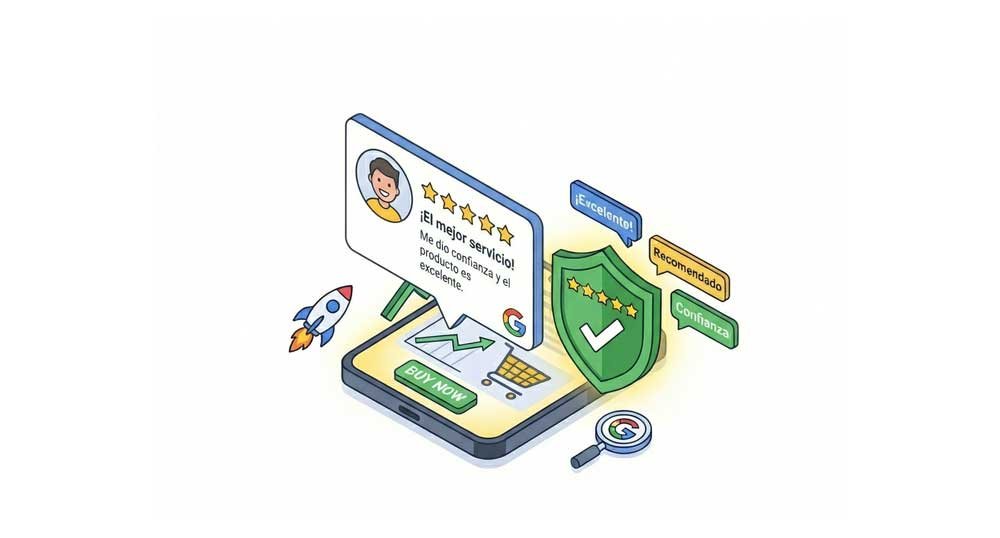
Reviews: The Silent Weapon of Local SEO (and E-commerce)
Reviews are direct signals of:
- Trust
- Activity
- Service quality
- Reputation
More authentic reviews = better local rankings
And higher conversion rates in your e-commerce.
Ask for reviews after:
- Deliveries
- Services
- Repairs
- Positive experiences
👉 Want to improve your reviews strategy?
Read this: Reviews for E-commerce: How to Sell More and Improve Your Rankings
Conclusion
Local SEO doesn’t replace e-commerce SEO.
They are different strategies—but when you have a physical store, they amplify each other.
- One brings visibility in Maps and local searches
- The other attracts people ready to buy online
Think of it as two entrances to the same business:
the street and Google.
The easier you are to find, the easier you are to buy from.
Now your turn 👇
Did I miss anything?
Want me to explain another real-world scenario with practical examples?
Leave a comment or send me a message—I’d love to keep improving this content with real questions from real businesses.